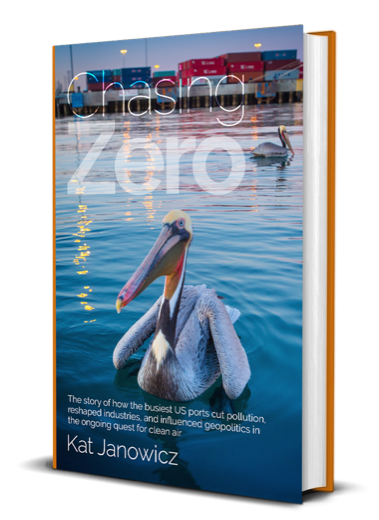
The landmark 2002 ruling in a lawsuit against the Port of Los Angeles and one of its terminal operators sent shock waves through global supply chains. To stay in business and continue to compete on the world stage, the LA and Long Beach ports had to start listening to the community and find common ground for reducing port-related air pollution. Ultimately, the ports underwent nothing short of an environmental reformation. Technical documents, legislative records, and news reports offer bits and pieces of this story, but the full account has never been told until now.
Drawing on more than two decades of experience in the energy, transportation, and technology sectors, Kat Janowicz digs deep to chronicle the transformation of the LA-Long Beach ports as a springboard for exploring the larger quest for an emission-free world: the choices, the costs, and the challenges. Janowicz reviewed thousands of documents, watched hundreds of hours of video recordings, and spoke to more than 150 people to tell this story and decode its complexities. Those who shared their knowledge, insights, and personal stories include current and former port executives and staff, elected and appointed officials, private industry leaders, scientists, educators, and everyday people who live and work in Southern California.
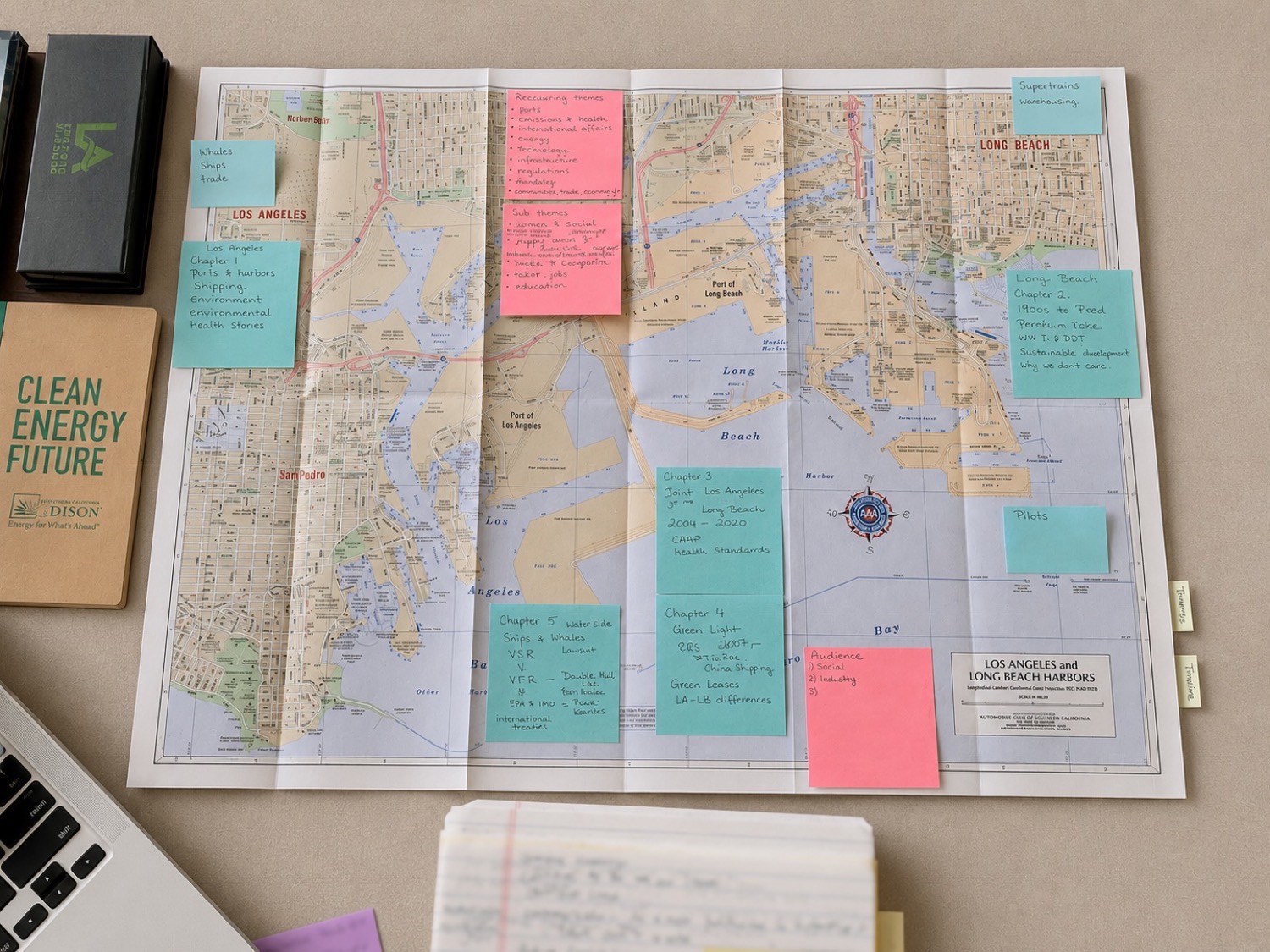
Plotting the book on a harbor map — one sticky note per chapter.
Captivating, informative, and entertaining, Chasing Zero—published by Rare Bird—is a primer for everyone from ordinary people to high-level decision-makers seeking to better understand the global trade, supply chain, technology, energy, and environmental issues and policies that affect us all. While painting a vivid portrait of the global challenges we face, the book sheds light on the exciting opportunities for current and future generations willing to tackle them.
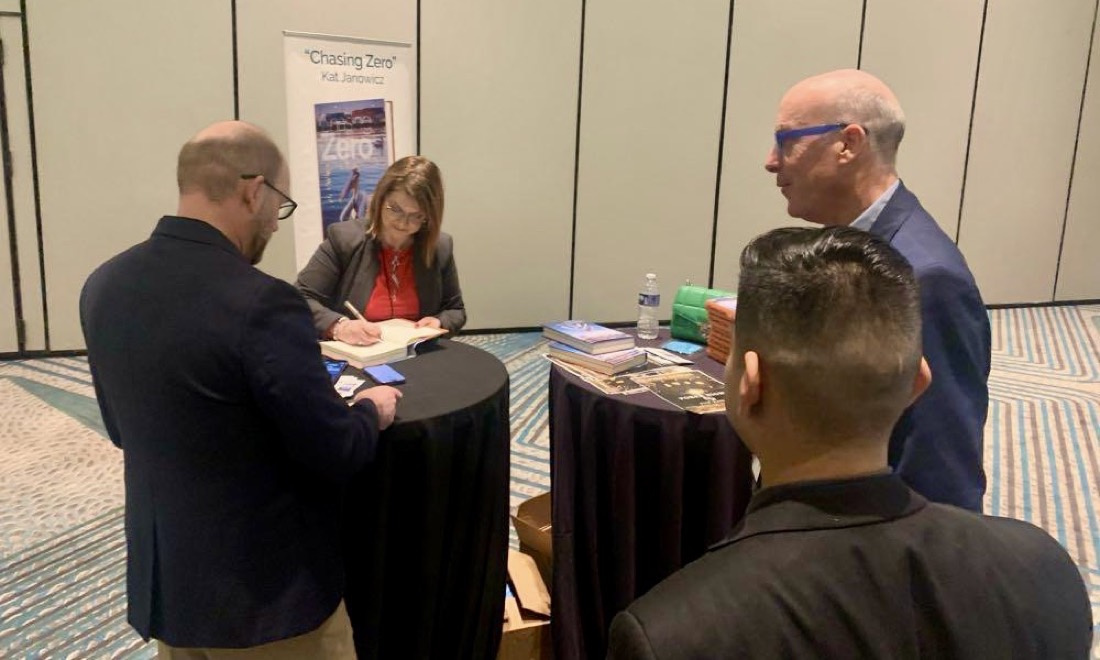
Kat signs books at events — if you are organizing one, get in touch.
Every purchase helps in a different way. Buying from your local bookstore encourages them to stock my book. Purchasing through Amazon or Barnes & Noble improves its visibility, especially when paired with a review. Buying directly from me allows for signed copies and a more personal connection, while also supporting my work more directly, though it doesn’t affect sales rankings.
Choose whichever option works best for you. If you’ve already read the book, the greatest gift you can give is a thoughtful review on Amazon, Goodreads, LinkedIn, or your own blog, and by recommending it to others. Word of mouth remains the most powerful way a book finds new readers.
Hear it from the fans
Chasing Zero is the remarkable story of how America’s largest port complex transformed its operations to dramatically reduce emissions, setting a trend that is now sweeping across ports around the globe. Until now, this story was relatively untold outside of the port community. Kat’s experience as a longtime environmental business strategist and transportation expert enabled her to write this story with unique insight and from the perspective of the policy makers, administrators and stakeholders who teamed up to set this chase for zero in motion nearly 20 years ago. The best part is that the story continues to unfold. As of the printing of this book, the Ports of LA and Long Beach are closer than ever to achieving zero emissions operations. The chase to zero continues and represents the next great frontier in international trade, port operations and sustainability.
Wading further through the history of aforementioned court proceedings, surprising collaborations between the competing ports of LA and Long Beach, feuds within the local city councils and with environmental organizations, local citizens, as well as terminal operators, Janowicz managed to objectively untangle the complex developments to fortify clean air policies since the landmark ruling in 2002.
One learning: while there was a lot of initiative shown by the ports to clean up their act, so did the Californian government, which then left the ports to put into action what a federal law demanded – and that sometimes without having jurisdiction.
The book, sometimes overwhelmingly, goes much further, to the beginnings of rail and road transport to the future of deep-sea mining and resource procurement for the decarbonization technology of tomorrow.
I thought I knew a lot about the Los Angeles/Long Beach/Wilmington/Terminal Island Port complex until I read Chasing Zero. I’ve worked in the logistics industry since 1976, before it was called logistics. Until the pandemic very few people understood exactly what I did and the complexity of bringing goods to the store shelves or now to your front door. I highly recommend this book for a realist account of the challenges in satisfying consumer demands. Great read! Thank you Kat
Norman HarrisLicensed Customs Broker, Customs Brokerage ManagerNNR Global Logistics USA Inc.Harris, Norman. 2023. “Review of Chasing Zero, by Kat Janowicz.” Goodreads. November 17, 2023.
What a great read. Zero Emission is in all our future. This book’s author provides incredible insight on the goals of moving to Zero Emissions within a complicated industrial complex environment.
Don PeltierDirector, Government and Industry RelationsDirect ChassisLink Inc. (DCLI)Peltier, Don. 2023. “Review of Chasing Zero, by Kat Janowicz.” Amazon. June 21, 2023.
Excellent book! “Chasing Zero“ is a great deep dive, depiction on how to evolve our transportation network into a zero emission supply chain. A great and informative read.
Don PeltierDirector of the Board, Foreign Trade AssociationImmediate Past President, Los Angeles Transportation ClubPeltier, Don. 2024. “Review of Chasing Zero, by Kat Janowicz.” LinkedIn. March 1, 2024.
Thank you Kat Janowicz (Yah-NOH-vich) for writing about the history of my efforts to reduce vessel emissions. Her new book outlines my contribution to vessel fuel switching which I originally introduced to CARB in 2004 and was made into a state law in July of 2009. I recently compared the current reductions posted on the Port of Los Angeles website to the CARB calculated reductions by fuel switching. The #POLA Air Quality Report for 2022 stated total reductions from the 2005 baseline are: PM = 89%, NOx = 35%, SOx = 97%. The savings from my concept alone, according to CARB accounts for the following reductions: PM = 81%, NOx = 33%, SOx = 84%.
As a 40 year veteran in the maritime industry, I am extremely proud to have made a positive impact on air quality, not only in the neighboring communities where I live and work, but the state as well.
Bill SchoppDirector of OperationsTraPacSchopp, Bill. 2023. “Review of ‘Chasing Zero’, by Kat Janowicz.” LinkedIn. December 21, 2023.
This important book by Kat Janowicz is fascinating. The historical context is so interesting and provides critical insight into how far we’ve come and how much has been accomplished in recent years. Kudos for drawing broader, deeper attention to this important topic. While I am greatly enjoying this book, I’m learning so much about the industry and getting more color on issues I only knew superficially about.
Susan Shey DvonchPartnerShey-Harding Executive Search
Zeroing in on Zero
Three questions the book keeps asking
How can technology work for everyone?
Computers, mobile phones and the internet are essential to everyday life. Technology also drives business. But not all solutions are fully developed or commercially available, especially when it comes to powering vehicles, equipment and vessels to deliver goods to market. Also, while new technology creates new jobs, increased efficiency often eliminates existing ones. How do we move forward without leaving people behind?
How do we build what everything else depends on?
Bridges, roadways, terminals and other critical infrastructure need to be built and maintained. Electric vehicles need to recharge, ships that run on liquefied natural gas need to refuel, as does equipment powered by hydrogen fuel cells. Nothing and no one moves without infrastructure. Building it requires money, materials and a trained, highly skilled workforce. How do we build the infrastructure that makes everything else possible?
What can we afford, and how do we choose?
It is said an engineer with an unlimited budget can build anything. But budgets are limited and technology and infrastructure have hefty price tags. Support infrastructure alone can be just as costly as the technology it’s meant to service. In a highly competitive world whose inhabitants include some who still question the reality of climate change, what resources can we cobble together to pay for a sustainable future and how do we use those resources wisely?
Readers
Out in the wild
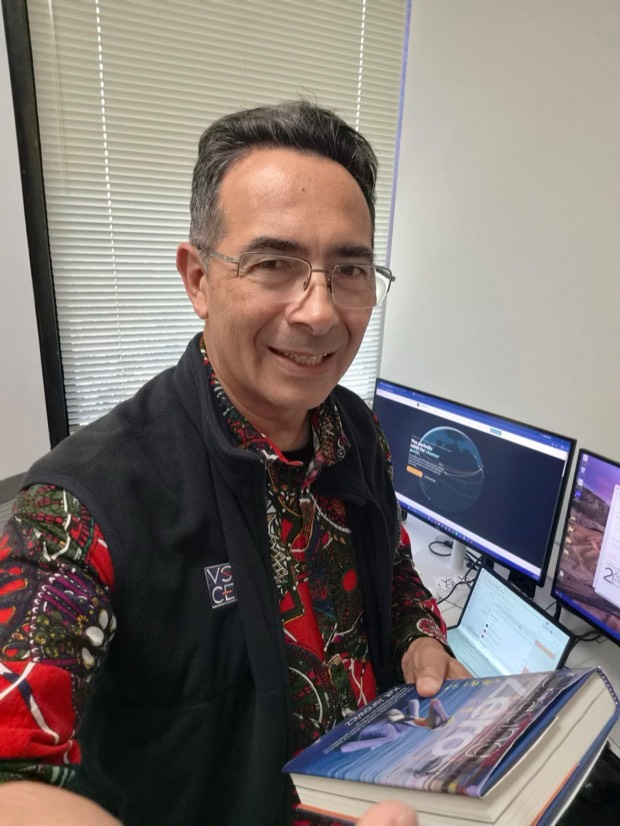
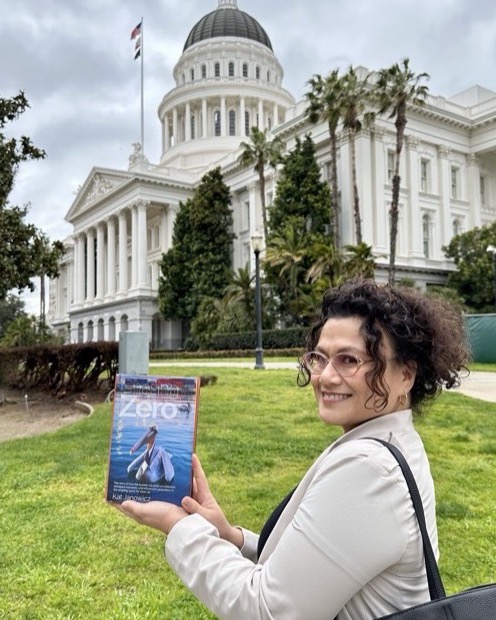
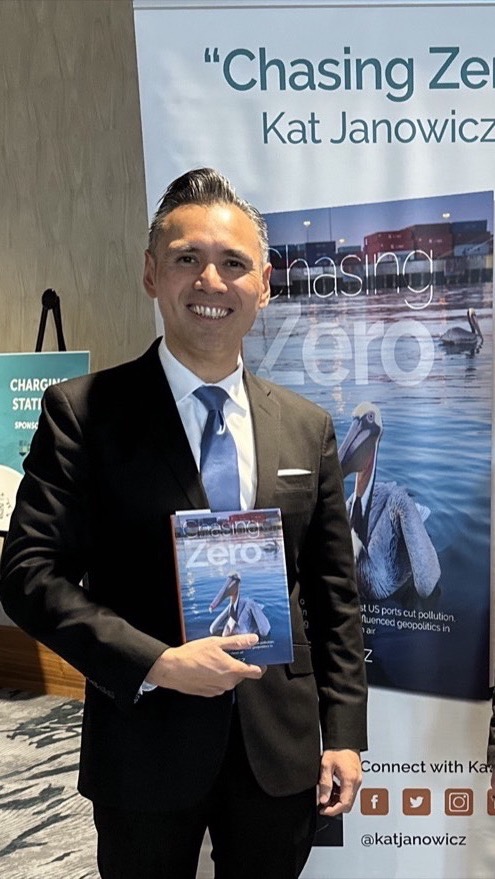
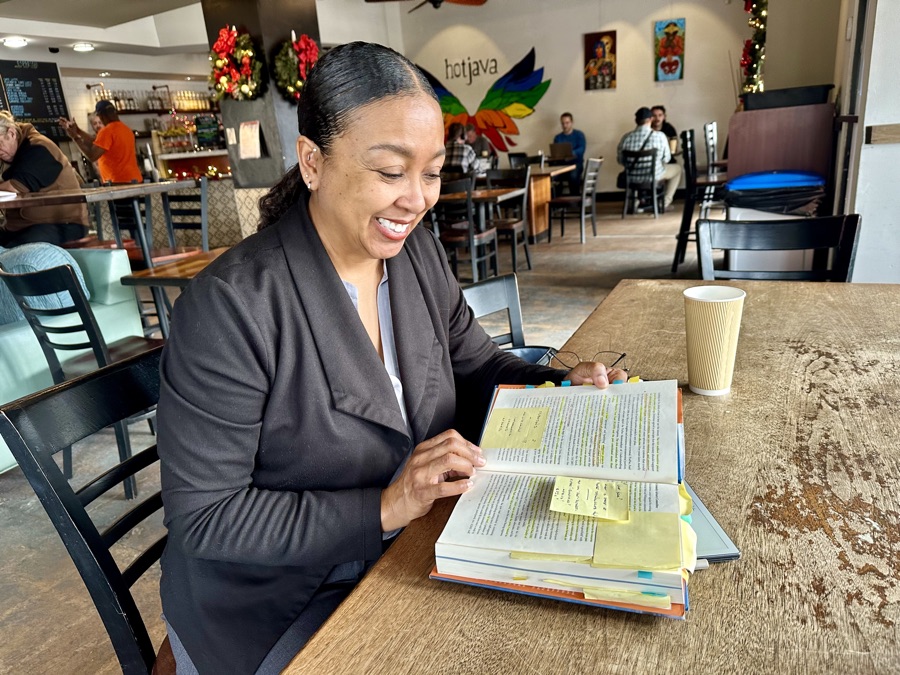
People with their copy, and the part that stayed with them — in their own words, in full.
Explore the “Going Green Timeline” that marks the pivotal moments in the LA-Long Beach ports’ environmental reformation. The San Pedro Bay Ports Clean Air Action Plan charts over two decades of the quest for clean air and commitment to sustainable progress.